
In the pellet stove vs wood stove decision, a pellet stove gives automatic, steady heat but needs electricity, while a wood stove costs less to run if you have firewood and keeps heating through a power outage. A gas insert is the low-effort choice if you already have a fireplace.
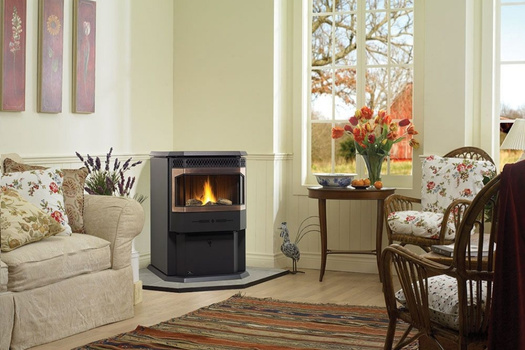
Each option heats differently, costs a different amount to buy and run, and asks a different amount of work from you. This pellet stove vs wood stove guide compares all three side by side so you can pick the right fit for your West Michigan home.
Fullmer & Sons Heating, Cooling & Fireplaces has helped families around Big Rapids choose and install stoves, inserts, and fireplaces since 1971. Our Big Rapids showroom has over 30 units on display, so you can see many of these options in person before you decide.
Pellet Stove vs Wood Stove vs Gas Insert at a Glance
- Fuel: pellet stove burns bagged compressed wood pellets; wood stove burns split firewood; gas insert runs on natural gas or propane.
- Ignition and control: pellet is automatic and thermostat-friendly; wood is manual; gas uses a push button, remote, or thermostat.
- Needs electricity: pellet yes; wood no; many gas models can run during an outage (check the model).
- Daily effort: fill the pellet hopper every day or so; load wood and manage the fire; very little with gas.
- Cleaning: regular ash and burn pot cleaning for pellet; ash removal and chimney sweeping for wood; minimal yearly service for gas.
- Best for: pellet for steady, easy heat; wood for outage heat and cheap firewood; gas for convenience in an existing fireplace.
Pellet Stove vs Wood Stove Costs (Plus Gas Inserts)
National cost guides give realistic ranges. These are not our prices, and your total depends on the unit, venting, and your home.
- Pellet stove: about $1,600 to $4,100 installed, while a fireplace-insert pellet stove costs up to $7,000 total, according to HomeGuide’s pellet stove vs wood stove cost guide.
- Wood stove: about $1,200 to $4,500 installed, per the same HomeGuide guide. A new chimney or liner can add to that.
- Gas fireplace insert: about $2,300 to $8,000 installed, with an average near $3,700, according to Angi (updated October 2026). Direct-vent inserts typically run higher than ventless.
Fuel costs vary a lot. Firewood can be very affordable if you cut your own. Pellets are sold by the bag or ton. Gas costs depend on whether you have natural gas or propane.
Pellet Stoves: Easy, Steady Heat
A pellet stove burns small compressed pellets fed automatically from a hopper into the fire. You fill the hopper, set the temperature, and the stove does the rest.
Pros
- Automatic feed and steady, even heat.
- Many models work with a thermostat.
- Clean-burning, with less creosote than wood.
- Pellets stack neatly in bags, so storage is simple.
Cons
- Needs electricity to run, so it stops during a power outage unless you have backup power.
- Has moving parts that need regular cleaning and service.
- You need to buy pellets each season.
Ask us which of our brands offer the pellet model that fits your space. Explore our pellet stoves or ask about pellet inserts for an existing fireplace.
Wood Stoves: Classic Heat, No Power Needed
In the pellet stove vs wood stove debate, many families in rural Mecosta, Osceola, and Newaygo counties, nothing beats a wood stove. It is simple, powerful, and works without electricity.
Pros
- Heats your home during a power outage.
- Very low fuel cost if you have access to firewood.
- The classic look, sound, and feel of a real fire.
- Many models let you cook on the top in a pinch.
Cons
- More hands-on: loading, managing the fire, and hauling wood.
- Requires dry, seasoned wood to burn well.
- Needs regular ash removal and chimney sweeping to control creosote.
Modern wood stoves are far cleaner and more efficient than older models; the EPA’s Burn Wise guide explains what to look for. Ask us which of our brands offer the wood model that fits your space. See our wood stoves and ask about wood inserts.
Gas Inserts: Convenience for Your Existing Fireplace
If you have an old, drafty masonry fireplace you rarely use, a gas insert can turn it into a reliable heat source. The insert fits into the existing firebox and vents through the chimney.
Pros
- Instant flame at the push of a button or remote.
- No wood to haul, no ash to clean.
- Thermostat control on many models.
- Works on natural gas or propane.
Cons
- Requires a gas line, which adds cost if one is not already nearby.
- No crackle or wood smell.
- Ongoing gas or propane costs.
Browse our gas inserts, or ask about gas stoves and gas fireplaces if you do not have a fireplace.
Fuel, Storage, and Everyday Life
Price tags only tell part of the pellet stove vs wood stove story. Think about how each option will fit into your week.
Storing fuel
Pellets come in bags that stack neatly in a garage or basement and stay clean. Firewood needs a covered, dry spot outdoors, ideally split and stacked months ahead so it can season. Gas needs no storage at all if you are on natural gas, while propane homes rely on regular tank deliveries.
Time and effort
With a wood stove, you will load the fire several times a day in cold weather. A pellet stove usually needs the hopper filled every day or two, depending on the model and setting. A gas insert asks almost nothing of you beyond yearly service.
Heat during power outages
Winter storms in West Michigan can knock out power. A wood stove keeps heating no matter what. Many gas units can also provide heat without power, but check the specific model. A pellet stove needs electricity or a backup power source.
Heating the whole house or one room
Freestanding stoves can heat a large open area well. Inserts are best at turning an inefficient fireplace into a real heat source for the main living space. Ask us about sizing so the unit matches the space you want to heat.
Questions to Ask Before You Buy
- How many square feet do I want to heat?
- Do I want a freestanding stove or an insert for my existing fireplace?
- Is my chimney in good condition, or does it need a liner?
- Do I have natural gas or propane nearby?
- How much time do I want to spend on fuel and cleaning?
Bring these answers to the showroom and we can narrow the pellet stove vs wood stove vs gas decision quickly.
Which One Should You Choose?
Choose a pellet stove if…
You want steady, automatic heat with less work than wood, and you do not mind buying fuel. It is a great fit for heating a main living area all winter.
Choose a wood stove if…
You have access to firewood, want heat that works when the power goes out, and enjoy tending a fire. It is a favorite for cabins, lake homes, and rural properties.
Choose a gas insert if…
You have an existing fireplace, want maximum convenience, and have natural gas or propane available.
Still torn between a pellet stove vs wood stove? Think about how much time you want to spend on fuel and cleaning, and how important outage heat is to you. Those two questions usually settle it.
Installation and Safety Matter
Any stove or insert must be installed correctly, with proper clearances, venting, and chimney work. A poor install can cause smoke problems, wasted heat, or worse. Our team handles the whole project, from choosing the unit to venting and setup.
A few safety basics apply to every option:
- Have the chimney or venting inspected before installing an insert.
- Keep working smoke and carbon monoxide detectors in your home.
- Schedule yearly cleaning and service.
- Keep furniture, rugs, and decorations at a safe distance.
You can read more in our guide to energy efficiency with modern fireplaces.
Financing Your Stove or Insert
Fullmer & Sons is an authorized Michigan Saves contractor, and we also offer financing on the Carrier credit card through Wells Fargo, upon approved credit. Visit our financing page to see what may work for you.
Visit Our Showroom or Get a Free Estimate
The easiest way to decide is to see the flames in person. Stop by our showroom at 20928 18 Mile Rd, Big Rapids, where we have over 30 units on display. We serve Big Rapids, Reed City, Stanwood, Canadian Lakes, Morley, Howard City, Newaygo, White Cloud, Evart, LeRoy, Tustin, and the surrounding area.
Call (231) 796-3403 or contact us to schedule your free estimate.
Frequently Asked Questions
Which is cheaper to run, a pellet stove or a wood stove?
A wood stove is usually cheaper to run if you have access to affordable or free firewood. A pellet stove costs more in fuel but is easier and more automatic.
Does a pellet stove work without power?
No. Pellet stoves need electricity for the auger, fans, and controls. A wood stove is the better choice if outage heat is a priority.
Can I put an insert in my existing fireplace?
Yes. Pellet, wood, and gas inserts are designed to fit existing fireplaces. We will inspect your fireplace and chimney to recommend the right fit.
How much does a gas fireplace insert cost?
Angi reports most gas inserts cost about $2,300 to $8,000 installed, with an average near $3,700. Gas line and venting needs affect the final price.
What brands do you carry?
We carry Regency, Enviro, Pacific Energy, Vermont Castings, Piazzetta, Breckwell, Buck, and more. Visit our Big Rapids showroom to see them in person.